
Close Reading the Declaration of Independence
We do a little New Criticism and "Revise the Revisionists"

America’s founding documents remain some of the most mysterious in its history—an impressive feat considering the number of ad hoc courses offered on this subject from every university between MIT and Hillsdale, and hundreds of other private grifters. One is left wondering exactly why the United States chose to separate themselves from the British Empire. Some of these courses and theories are derived from a good, albeit ignorant place, and some of them—especially (go figure) Catholic theories—border on actual subversion.
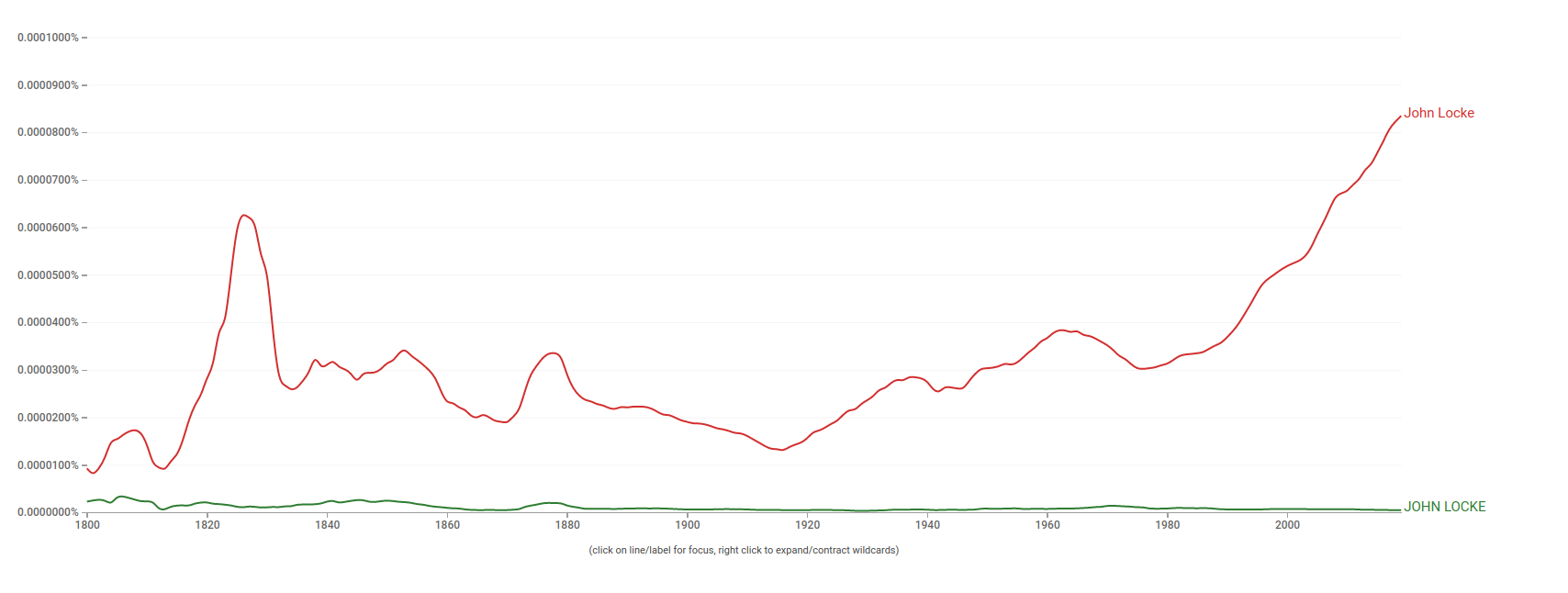
Far and away the most common theory is that something to do with Lockean liberalism induced George Washington & Co to revolt against the natural and good disposition of absolutist monarchy, and the weirder entries in this genre attempt some kind of strange recovery for the figure of Washington himself, who converts to Catholicism on his death bed and (we guess) saves America by his repentance.
It is easy to forget that Thomas Jefferson, John Adams, Benjamin Franklin and Roger Sherman wrote a document explaining exactly why the colonies were doing this. This should not be esoteric history, but apparently, it is, so we are going to take the complaints against the mother country one at a time (except for the ones that repeat themselves) and get this out of the way.
He has refused his Assent to Laws, the most wholesome and necessary for the public good.
He has forbidden his Governors to pass Laws of immediate and pressing importance, unless suspended in their operation till his Assent should be obtained, and when so suspended, he has utterly neglected to attend to them.
This is the first, and broadest complaint. It attempts to characterize the colonies as being under the yoke of a malignant and despotic tyranny, without getting too far into the specifics of exactly who should be allowed to make laws in the colonies. This one reflects the conciliatory approach John Adams favored at the outset of the Revolutionary affair, and simply attempts to point out that both the King and Parliament have abandoned their post in the Colonies.
The King has, on one hand, refused to recognize laws made by the governing bodies of the colonies, as well as the laws made by some of his directly appointed colonial governors. This refusal to acknowledge the laws, under the contemporary political arrangement, made nearly all of the laws unenforceable. The special complaints here revolve largely around the inability of Northern merchant voyage financiers and Southern tobacco shippers to bring lawsuits against predatory counter-parties in Britain, especially the East India Company, which was granted a monopoly on commerce going into the colonies.
He has called together legislative bodies at places unusual, uncomfortable, and distant from the depository of their public Records, for the sole purpose of fatiguing them into compliance with his measures.
This charge refers specifically to grievances from the two oldest colonies, Virginia and especially Massachusetts. The colonies were usually granted fairly wide latitude in how they chose to elect their little mini-parliaments, but both Virginia and Massachusetts possessed special charters as a result of being founded under the near medieval jurisprudence of the early Stuart kings.
The Massachusetts Assembly, though, had already revolted against the Crown once, right after the Glorious Revolution, when the new German kings had attempted to remove their charter. Though they won it back eventually, as the 18th century progressed, these charters appeared more and more dangerous to Crown control of the colonies.
The King and his government had gotten into the habit of demanding that Burgesses and Assemblymen in Virginia and Massachusetts meet in increasingly remote parts of their provinces, at increasingly unusual times. The goal, of course, was to depress attendance at these meetings and prevent the colonial assemblies from being able to conduct the business of their colonies, increasing reliance on the growing cadre of royal and East India Company officials present in the major settlements.
He has dissolved Representative Houses repeatedly, for opposing with manly firmness his invasions on the rights of the people.
An escalation of the previous complaint—this is certainly Jefferson talking now.
In May of 1774, after the Boston Tea Party demonstrations against the Townsend Acts, Parliament closed the Boston port in retribution. The colonial assembly in Virginia, the House of Burgesses (currently the longest standing representative body in the world) passed a number of resolutions in support of the Boston protesters. In response, the Royal Governor—the odious and infamous Earl of Dunmore—dissolved the House of Burgesses and began raising loyalist militias.
The Burgesses responded by re-convening in Norfolk, where they issued calls for the First of five Virginia Conventions. From this point onward, Virginia was split between governance by a Royal Governor who’d fled the colony and was ruling by fiat from a warship in the Chesapeake Bay, and a de-centralized network of “Committees of Public Safety” aligned with the Burgesses-In-Exile.
Virtually all of Virginia’s Revolutionary heroes entered the scene at one of these Virginia Conventions, and it was at the Second that Patrick Henry gave his famous “Give me liberty or give me Death” proclamation.
He has refused for a long time, after such dissolutions, to cause others to be elected...
...whereby the Legislative powers, incapable of Annihilation, have returned to the People at large for their exercise; the State remaining in the meantime exposed to all the dangers of invasion from without, and convulsions within.
This is perhaps the most interesting, in hindsight, of (again, surely) Thomas Jefferson’s formulations. It is worth remembering that Jefferson composed most of the final draft drunk on wine and fiddle music just a few days before the document was ratified. This is arguably the only passage that makes any reference whatsoever to an abstract theory of Government, but what it boils down to is Jefferson accusing the King of creating libertarian anarchy in the colonies.
Jefferson continues his attack on the King’s dissolution of Parliament and bolstering the First Continental Congress’s legitimacy by pointing out that—and this is big—that “Legislative powers” are “incapable of Annihilation”. This means they cannot be eliminated by fiat, that the “right” to legislative rule-making exists prior to the king and the State.
He has obstructed the Administration of Justice...
He has made Judges dependent on his Will alone, for the tenure of their offices, and the amount and payment of their salaries.
At this point in the evening, Jefferson has gotten his cocktail of music, pot, and Madeira wine exactly right, and is embarking on the high, white, fine flash of brilliance that makes his name streak in acrid lightning bolts across the night of time.
He has erected a multitude of New Offices, and sent hither swarms of Officers to harass our people, and eat out their substance.In those days, dear reader, the power to appoint judges was arguably more political than it is today. There were no digital handshakes, or tokens, or independent means of verifying information in contracts—so judicial officials were exceptionally important to resolving even petty disputes between contractors.
Almost all of the colonies (Georgia being an exception, I think) were initially imbued with the right to appoint their own lower justices. As the British attempted to tighten their grip on the colonies, and especially to enforce the hated Townsend Acts, they stripped the colonies of this privilege.
From the perspective of the merchant financiers of New England and the Planters of Virginia and South Carolina—this was among the worst in the “continuous train of abuses.” Court fees now functioned as hidden taxation, and judges appointed by the King were predictably loyal to his monopolies.
He has kept among us, in times of peace, Standing Armies, without the consent of our legislatures.
He has affected to render the Military independent of and superior to the Civil power.
This is the most esoteric of all Thomas “All Cops Are Bad” Jefferson’s complaints—but it is also one of the ones that excited the most popular support. The colonial peoples of America were obsessed with the English Civil Wars and the constant military conscriptions of the Old World.
Quartering troops in American homes was common and widely resented. The promise not to do so became a signature break with “the traumas and vagaries of the Old World.”
For protecting them by a mock Trial from punishment for any Murders which they should commit on the Inhabitants of these States.
For cutting off our Trade with all parts of the world
For imposing Taxes on us without our Consent
For depriving us in many cases of the benefits of Trial by Jury
For abolishing the free System of English Laws in a neighbouring Province...
He has abdicated Government here by declaring us out of his Protection and waging War against us.
Jefferson and Company have one more complaint—one that was added at the last minute:
He has plundered our seas, ravaged our Coasts, burnt our towns, and destroyed the lives of our people.
He is at this time transporting large Armies of foreign Mercenaries to complete the works of death, desolation and tyranny...
As early as the beginning of 1776, the majority of representatives in the Continental Congress hoped to avoid outright war with the United Kingdoms. But the Revolution was already underway—brutal, bloody, and escalating.
Over the fire place, they wrote, in blood, “Ye shalle never give birthe to a Rebel.”
Jefferson wraps the whole thing up with some housekeeping—but that list of complaints is the gist of it. The Declaration of Independence, of course, is one of the most well-known documents in American history, but people almost always stop reading after:
“We hold these truths to be self-evident...”
Now that we’ve gone through the “continuous train of abuses” cited by the colonists—we hope you are in a slightly better position to understand what exactly was going on here. This was not a Revolution, like the French one, that was begun on behalf of some abstract ideas like liberty, equality, and fraternity.
It was a very specific set of (usually economic) complaints made by an aggrieved party in a contract predicated on “English liberty” and the “English Constitution.”
I don’t want to hear anything about John Locke—get outta here.
And have a good Independence Day, for those who celebrate.
John Quincy Adams translated an Austrian Conservative defense of the American Revolution as a defense of property & rights against novel forms of state-craft. But there's the irony that American colonists believed in the myth of an England long gone, the liberty of King Billy the Good for the Protestant Interest, when everything had become banks & Blackstone's parliamentary sovereignty.